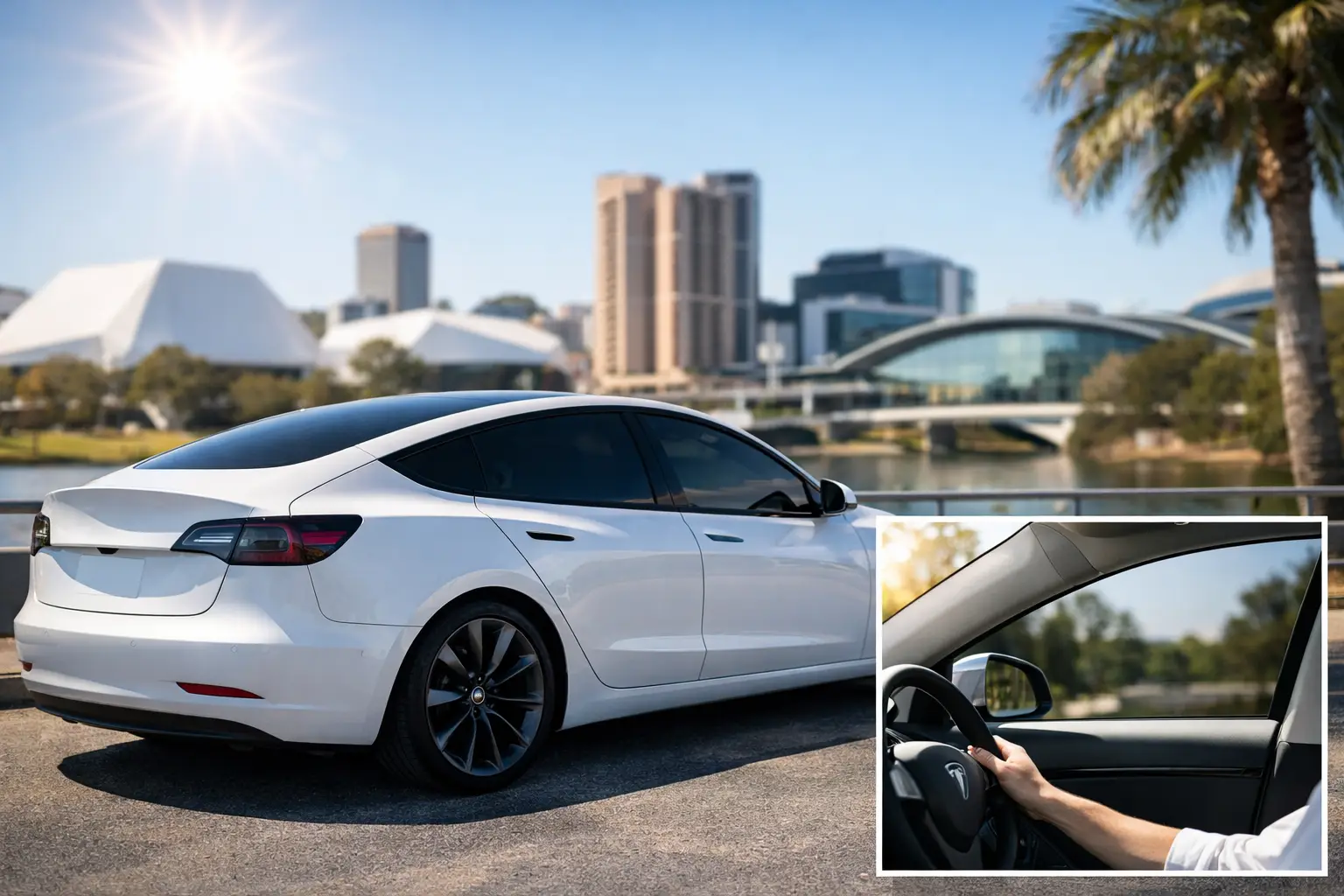
A Tesla’s glass roof and large windows are a big part of what makes the cabin feel open. On a bright Adelaide afternoon, they can also make the interior feel hotter than expected. Tesla window tint Adelaide owners choose should do more than darken the glass. It should reduce glare and heat, protect the interior from UV exposure, and suit the way you use your car every day.
The right film makes school runs, commutes and weekend drives noticeably more comfortable. The wrong choice can leave you with poor visibility at night, a finish that does not suit the vehicle, or tint that does not meet South Australian requirements. A professional installation helps you get the benefits without the guesswork.
Why Tesla window tint in Adelaide is different
Tesla models have more glass than many conventional vehicles. Whether you drive a Model 3, Model Y, Model S or Model X, the expansive windscreen, side windows and panoramic roof expose more of the cabin to direct sunlight. That means the film choice matters as much as the installation itself.
Adelaide heat can build quickly when a car is parked outside at work, at the shops or in the driveway. Tint will not replace air conditioning, but quality film can reduce the solar energy entering through the glass. The cabin takes less of a hit while parked, and the air conditioner does not have to work as hard once you set off.
There is also the comfort factor. Lower glare through the side windows can make driving easier when the sun is low, while UV protection helps look after your skin and the materials inside the cabin. Seats, trims and screens are exposed to a lot of light over the life of a vehicle. Tint is a practical layer of protection for a car you plan to keep looking sharp.
What a quality tint film should do
Not all window films perform the same way. A very dark film may provide privacy, but darkness alone is not a measure of heat rejection or UV performance. For Tesla owners, ceramic window film is often worth considering because it is designed to reject a high amount of heat without relying solely on a dark appearance.
A good film should provide strong UV protection, help cut heat and glare, and maintain clear visibility. It should also be compatible with the vehicle’s electronics. Modern Teslas rely on cameras, sensors and connectivity, so the installation needs to be neat and carefully planned around the glass and trims.
Ceramic film for heat without an overly dark look
Ceramic film is a popular option for drivers who want comfort but do not want their Tesla to look heavily tinted. It can offer effective heat rejection in lighter shades, keeping the vehicle’s clean factory styling intact.
This can be especially useful on front side windows, where legal limits and night-time visibility need to be considered. A lighter, high-performing film can be a smarter choice than going as dark as possible. You still gain useful heat and UV reduction while keeping the cabin bright and the view out clear.
Privacy glass is not always tint
Some Tesla rear windows may look darker from the factory. That is often privacy glass, which is coloured glass rather than a performance film. It may offer privacy, but it does not necessarily deliver the same level of heat rejection or UV filtering as a quality aftermarket tint.
Adding film to factory privacy glass can improve comfort and create a more consistent appearance across the vehicle. The final darkness needs to remain legal, so it is worth having the glass assessed before choosing a film shade.
Choosing the right shade for your Tesla
The best tint shade depends on where you park, how often you drive at night and the look you prefer. There is no single shade that suits every Tesla owner.
If your car spends long hours in open car parks, prioritising heat rejection is sensible. If you frequently drive after dark on unlit Adelaide roads, a lighter front film may be more comfortable and safer for your eyes. Families may value reduced glare for rear-seat passengers, while commuters often want a balanced finish that improves comfort without making the cabin feel closed in.
A clean, even appearance usually comes from matching the film choice to the existing glass. Rather than selecting a shade from a photo, look at film samples against your own vehicle in natural light. What looks subtle on one colour Tesla can look much darker on another.
South Australian tint rules matter
Window tint must comply with South Australian vehicle standards. For most passenger vehicles, front side windows generally need to allow at least 35% visible light transmission. The windscreen has stricter requirements and should not be tinted outside the permitted top strip. Rear windows may allow darker tint in some circumstances, but the exact outcome depends on the vehicle and existing glass.
Visible light transmission, often called VLT, is the amount of visible light that passes through the glass and film together. This is why a film labelled with a particular percentage does not automatically produce that same result once applied to factory glass.
A professional installer should check the existing glass, discuss the legal limits and recommend a film that gives you the result you want without creating problems at inspection time. Legal tint is not just about avoiding a defect notice. It also helps ensure you can see properly in rain, at night and in changing light.
Should you tint the Tesla glass roof?
The glass roof is one of the most common questions from Tesla owners. Tesla roofs already use specialised glass designed to reduce solar heat and UV exposure, so additional tint is not always necessary. For some drivers, the factory performance is enough.
It depends on how the car is used. If you regularly park outdoors, carry children in the rear seats or find the cabin still gets uncomfortable in summer, additional roof film may be worth discussing. A suitable clear or lightly shaded film can provide another layer of heat control without changing the open feel of the roof.
There are trade-offs. Roof tint is a more specialised job due to the size and shape of the glass, and it should be installed with care to avoid unnecessary disturbance to interior trims. The right recommendation should be based on your model, comfort expectations and budget, not an automatic add-on.
Mobile or workshop installation: pick what works best
A mobile tint appointment is ideal when your schedule is tight. Having the work completed at home or at the office can save time and make it easier to protect your Tesla without rearranging the whole day. For straightforward side and rear window tinting, a suitable mobile setup can deliver a professional result where you are.
A workshop appointment may be the better option when conditions are unpredictable or when the job includes more detailed work, such as roof film or other appearance protection services. A controlled environment helps keep dust and wind away from the installation area.
With Rox Auto, you can choose the option that suits your day. Mobile appointments come without a travel fee, or you can book into the workshop when you prefer a dedicated space. You pick what works best. We’ll handle the rest.
What to expect after installation
Fresh tint needs time to cure. During this period, you may notice light haze, small water pockets or a slightly uneven appearance. This is normal as the installation solution dries and the film settles against the glass. Avoid winding down tinted windows until your installer confirms it is safe to do so.
Curing time varies with weather and film type. Warm, dry Adelaide conditions can help, while cooler weather may extend the process. Once cured, clean the inside of the glass with a soft microfibre cloth and an ammonia-free cleaner. Avoid abrasive pads, harsh chemicals and sharp tools near the film edges.
Good tint should look smooth, clean and properly finished around the window edges. It should not interfere with everyday use of the vehicle, and it should continue to perform through hot summers, bright mornings and regular washing.
Pair tint with protection that suits the rest of the car
Window tint handles the glass, but Teslas also benefit from looking after paintwork exposed to sun, road grime and daily wear. Ceramic coating can add gloss and make exterior maintenance easier, while paint correction can improve the finish before coating on a pre-owned or well-driven vehicle.
These services are not mandatory to get value from tint. They do, however, make sense when you want the vehicle to feel consistently protected inside and out. A clear plan based on the car’s condition and how long you expect to own it is better than paying for extras you do not need.
Before choosing a shade, think about your hottest parking spot, your night driving and what you want your Tesla to look like from the outside. A professional tint consultation can turn those everyday details into a finish that keeps the car cooler, clearer and ready for the kilometres ahead.