
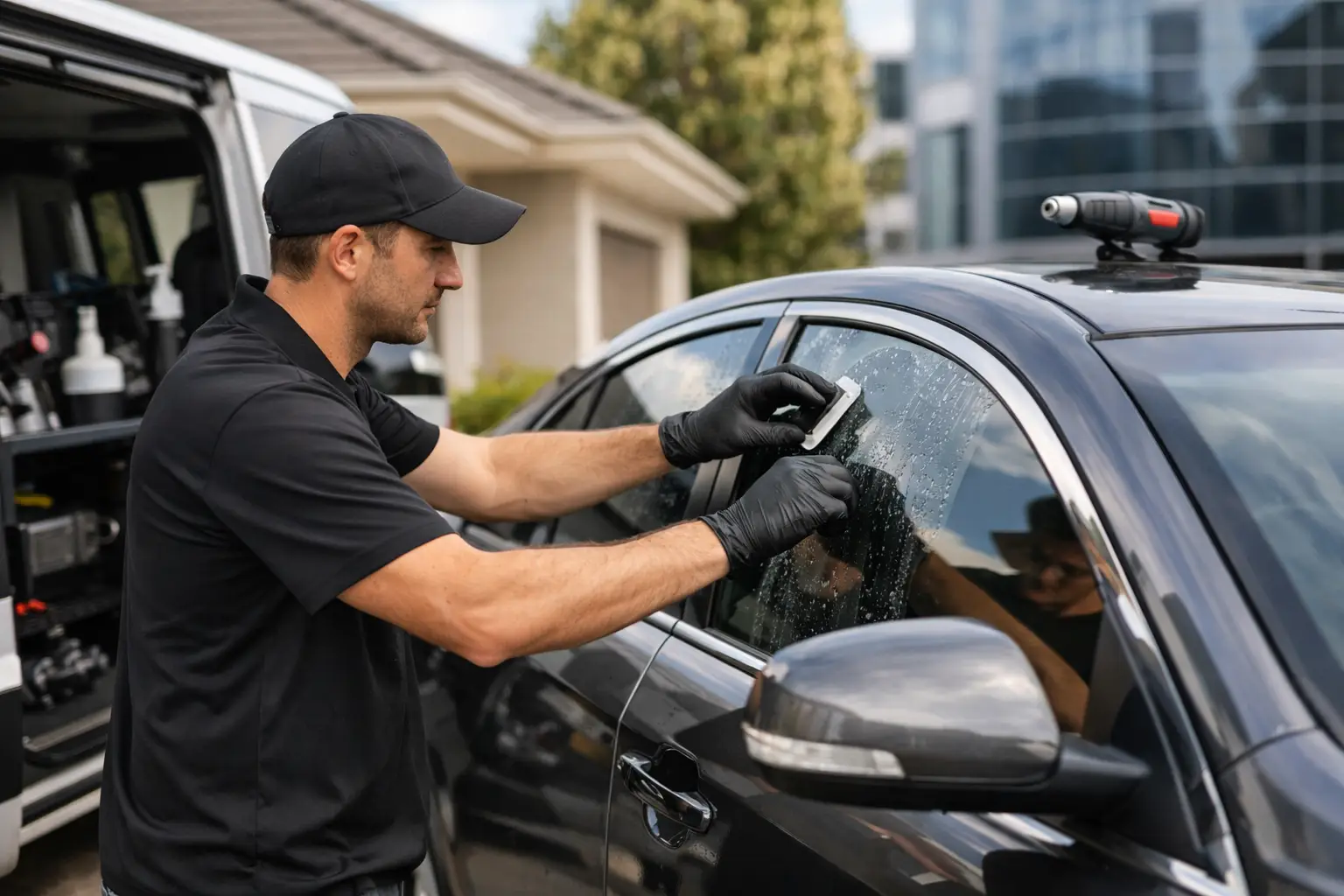
A hot Adelaide afternoon can turn a parked car into the last place you want to be. With mobile window tinting Adelaide drivers can have professional film fitted where the car already is – at home, at work or another suitable location – without giving up a day to sit in a waiting room.
Good tinting is not just about making a car look sharper. The right film helps reduce glare, limits UV exposure, makes the cabin more comfortable and gives the interior extra protection from the harsh SA sun. The key is choosing an installer, film and appointment setting that suit your vehicle and how you use it.
Why mobile window tinting Adelaide drivers choose makes sense
Convenience is the obvious benefit. If your car spends most weekdays in an office car park or your weekends are filled with family commitments, a mobile appointment removes one more job from the list. You choose a suitable time and location. The installer brings the tools, prepares the glass and completes the work while you get on with your day.
There is a practical benefit too. Tinting works best when it is done properly the first time. Professional film is cut and applied to suit each window, with careful attention around seals, edges and rear demisters. That helps prevent common problems such as lifting corners, visible contamination, bubbling and uneven coverage.
Mobile service is a strong fit for sedans, SUVs, utes and family cars that need a comfort and privacy upgrade without extra travel. For many owners, it is the easiest way to protect a daily driver before another long Adelaide summer.
What quality window tinting actually does
A quality window film changes how the cabin feels, especially on bright days. It reduces glare from low sun, reflective roads and surrounding traffic, which can make commuting easier on the eyes. It can also reduce the amount of solar heat entering through the glass. Results vary by film type, glass area and vehicle, but the difference is often noticeable when getting back into a car that has been parked outside.
UV protection matters just as much. UV rays can contribute to fading and wear on dashboards, door trims, leather and fabric. Tint film adds a layer of defence for those interior surfaces, helping them stay in better condition over time. It is also a welcome extra for drivers and passengers who spend plenty of time on the road.
Then there is the finish. Factory clear glass can leave a vehicle looking plain, while professionally chosen tint gives it a cleaner, more considered appearance. A subtle shade often suits executive sedans and newer SUVs, while a darker legal option can complement a ute or performance car. The best choice is usually one that improves the look without making night driving harder than it needs to be.
Heat reduction depends on the film, not just darkness
A dark tint is not automatically the best tint for heat. The technology in the film makes a real difference. Higher-quality films can reject more heat and UV while maintaining good visibility from inside the vehicle. That is why it is worth discussing what matters most to you: maximum heat reduction, a darker appearance, clearer night vision, privacy, or a balance of all four.
If your car is regularly parked outdoors, heat performance may be the priority. If you do lots of early starts, country driving or late-night travel, visibility should be high on the list. A professional installer can explain the available options in plain terms rather than pushing a one-size-fits-all shade.
Is your driveway or workplace suitable for a mobile tint appointment?
Mobile tinting needs a reasonably clean, sheltered workspace. A garage, carport, covered driveway or protected area at your workplace is ideal. The vehicle needs enough room around it for the installer to work safely and for the doors to open fully.
Weather can affect the appointment. Strong wind can carry dust and debris onto the glass, while rain and extreme exposure are not ideal conditions for careful installation. A good mobile provider will be upfront if conditions mean the job should be moved, rescheduled or completed at a workshop instead. That is not an inconvenience for the sake of it – it is about protecting the quality of the finish.
A workshop appointment can be the better choice when your property has no cover, the forecast is poor or your vehicle needs other appearance work at the same time. If you are combining tinting with paint correction or ceramic coating, having the work completed in a controlled space can make scheduling simpler.
Staying legal with window tint in South Australia
Window tint needs to comply with current South Australian road rules. Legal requirements differ depending on the window, and the windscreen is subject to much tighter restrictions than side and rear glass. The final result is measured by visible light transmission, not simply how dark the film looks.
This matters because some glass already has a factory tint. Adding film changes the total visible light transmission, so selecting a film based only on its labelled percentage can lead to an unintended result. A professional installer considers the existing glass and recommends an appropriate legal option for your vehicle.
Very dark tint might look tempting online, but it can reduce visibility in low light, rain and underground car parks. It may also create avoidable issues with compliance, inspections or insurance. The sensible option is one that gives you comfort, style and privacy while keeping the car suitable for everyday driving.
What happens during a professional tint installation
The process starts with checking the vehicle, the glass and your preferred result. Before film is applied, each window is thoroughly cleaned to remove dust, residue and grime. Preparation is a big part of a tidy finish because even small contaminants can become noticeable once film is on the glass.
The film is then measured, shaped and applied to each suitable window. The installer uses a solution and specialist tools to position the film, remove moisture and secure it around the edges. Rear windows require extra care because of their shape and demister lines.
Once the work is complete, the film needs time to cure. It is normal to see a little haze or small water pockets while moisture evaporates, particularly in cooler conditions. Avoid winding the windows down until advised by your installer. Curing time can vary with the weather and film used, so follow the aftercare advice rather than judging the result too early.
Choosing the right tint for your vehicle
Start with how the car is used. A family SUV may need strong heat and UV reduction for school runs and weekend trips. A work ute may benefit from glare reduction and a more private rear cabin. A prestige vehicle may call for a refined look with high-performing film that keeps the interior clear and comfortable.
Budget is part of the decision, but cheapest is rarely best when it comes to window film. Lower-grade film can fade, discolour or lose adhesion sooner, and replacing failed tint means paying twice. Professional-grade film and careful installation offer better value because they are designed to perform and look good over time.
It also helps to ask about the warranty, the film type and the expected aftercare. Clear answers are a good sign that the provider stands behind the work. At Rox Auto, the aim is simple: help Adelaide vehicle owners choose a tinting option that suits their car, schedule and budget, then make the appointment easy.
A simple way to prepare for your appointment
Remove personal items from the door pockets, dashboard and rear parcel shelf before the installer arrives. If possible, give the car a quick clean beforehand, particularly around the windows and door frames. It does not need to be showroom perfect, but a tidy vehicle gives the installer clear access and helps the job run smoothly.
Let the installer know before the appointment if the vehicle has aftermarket accessories, damaged window seals, old tint that needs removing, or any electrical issues with the windows. These details can affect timing and the best approach. If tint removal is required, allow extra time, especially where old film has deteriorated or adhesive remains on the glass.
The best mobile appointment is one that fits your day and gives the installer the right conditions to do careful work. Pick a sheltered spot, choose a film that matches the way you drive, and give it the proper curing time afterwards. Your car will be more comfortable before the next run across Adelaide in the afternoon sun.