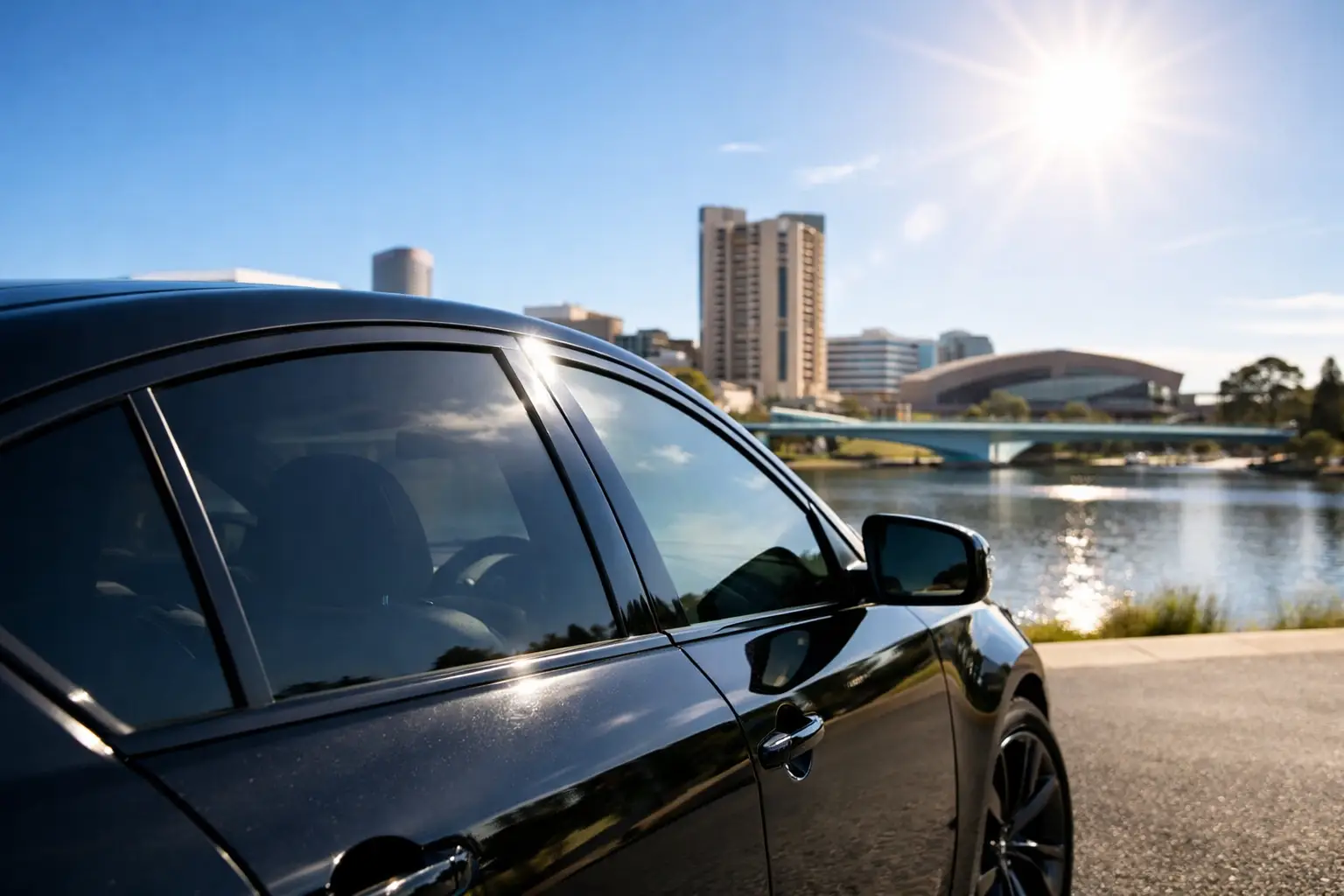
A car that has been sitting outside through an Adelaide summer can feel like an oven before you have even turned the key. Finding the best window tint for heat is less about choosing the darkest film and more about choosing a quality film that blocks solar energy while keeping your vehicle legal, comfortable and easy to see out of.
The right tint can make daily driving more comfortable, reduce glare on bright roads and help protect your interior from harsh UV exposure. But not every film performs the same way. A cheap dark film may change the look of your car, yet do very little to manage the heat that builds up through the glass.
What actually makes window tint effective against heat?
Heat entering your vehicle through the windows comes from more than visible sunlight. Solar energy includes infrared radiation, which is the part most associated with the heat you feel, as well as UV radiation and visible light. Good automotive window film is designed to manage all three.
When comparing films, look beyond the shade. The key performance figures are infrared heat rejection, total solar energy rejected and UV protection. These figures tell you far more about comfort than whether a film looks dark from the outside.
A lighter, high-performance ceramic film can often reject more heat than a darker entry-level dyed film. That is why a vehicle with legal, medium-shade ceramic tint may feel noticeably cooler than one fitted with very dark budget tint.
Window tint will not stop a car from getting hot after hours in direct sun. The dashboard, seats and other surfaces still absorb heat. What it can do is reduce the amount of solar energy entering through the glass, so the cabin heats up more slowly and becomes more manageable once the air conditioning is running.
Best window tint for heat: ceramic film leads the way
For drivers who want the strongest heat reduction without compromising visibility, ceramic window tint is usually the best choice. It uses non-metallic ceramic particles to reject infrared heat and UV rays, rather than relying only on a dark appearance.
Ceramic tint is particularly suited to Adelaide drivers who spend time commuting, carry children, park outdoors or simply want the cabin to feel more comfortable on hot days. It can provide strong heat performance in lighter shades, which matters when you need to stay within South Australian tint rules.
Another benefit is signal friendliness. Because ceramic films are non-metallic, they are less likely to interfere with GPS, Bluetooth, mobile reception or keyless entry systems. That makes them a practical option for newer vehicles with more technology built into the cabin.
The trade-off is price. Ceramic film costs more than basic tint because the material and heat-rejection performance are better. For a car you plan to keep, or one used every day, the comfort and interior protection can make that upgrade worthwhile.
Carbon tint is a strong middle-ground option
Carbon window film is often a sensible choice for drivers wanting better performance than entry-level tint without moving to a premium ceramic product. It has a clean, dark appearance, good UV protection and more stable colour than basic dyed films.
Its heat rejection is generally lower than quality ceramic tint, particularly when it comes to infrared heat. Still, it can be a good option if your priority is a balanced result: improved comfort, a sharper look and a more manageable budget.
Dyed tint is usually about appearance first
Dyed film is commonly the most affordable option. It can reduce glare, add privacy and improve the look of a vehicle, but it is not normally the best choice where serious heat reduction is the main goal.
Lower-grade dyed films can also fade, turn purple or lose their appearance over time. In Adelaide’s strong sun, choosing a proven film and professional installation matters. Replacing failed tint is frustrating and often costs more than choosing a better option from the start.
Tint darkness is not the same as heat rejection
This is one of the most common misunderstandings around car tinting. Darker windows reduce more visible light, so they can feel less bright and offer more privacy. That does not automatically mean they are rejecting more heat.
A quality ceramic film in a lighter shade can deliver excellent solar control while keeping night-time visibility better than an overly dark film. This is especially useful for drivers who regularly travel on poorly lit suburban roads, park in dim car parks or have young passengers to check on from the front seats.
Before choosing a shade, think about how and when you use your car. A family SUV used for school drop-offs and weekend trips may suit a practical legal shade with high heat rejection. A weekend ute or enthusiast vehicle may have different priorities, but heat performance and visibility should still come before looks alone.
Stay legal in South Australia
Window tint needs to meet South Australian road rules. The front windscreen cannot be tinted other than an approved visor strip at the top, and front side windows must meet the required visible light transmission level. Rear-window rules can vary depending on the vehicle and whether it has external rear-view mirrors.
The important point is that the final result is measured through both the film and your existing factory glass. Factory glass already has a level of tint, so applying a film labelled with a particular percentage does not guarantee the finished window will be legal.
A professional installer should assess the vehicle, explain suitable film shades and help you choose an option that gives you the privacy and heat reduction you want without creating issues at a roadside inspection. If someone promises an extremely dark front tint with no discussion of legality, that is a warning sign.
Choose the right tint for how you use your vehicle
The best choice depends on your priorities, your budget and where your car spends most of its time.
If you park outside at work or leave the car in an exposed driveway, prioritise high infrared and total solar heat rejection. Ceramic tint is usually the strongest option here. If you mainly want a cleaner appearance, glare reduction and dependable UV protection at a lower cost, carbon tint may be the better fit.
For families, UV protection matters just as much as cabin comfort. Quality window film helps protect passengers and reduces the sun exposure that can fade upholstery, dry out leather and damage interior trim over time. It also takes pressure off your air conditioning system during hot weather, although it will not replace a properly functioning air con system.
For premium vehicles, a high-quality ceramic tint pairs well with paint protection or ceramic coating. The tint protects the cabin while exterior protection helps preserve the paintwork, gloss and easier-to-clean finish. They solve different problems, but together they help your vehicle hold up better against daily Adelaide conditions.
Why professional installation makes a difference
Even the best film can disappoint if it is poorly fitted. Dust contamination, uneven edges, trapped moisture, bubbles and lifting corners all affect the finish and long-term durability of tint.
Professional installation starts with clean glass, careful preparation and film cut precisely for your vehicle. The installer should also explain the curing process. Fresh tint can look slightly hazy or show small water pockets while the installation solution dries. This is normal and usually clears as the film cures, particularly in warmer weather.
Ask what film is being used, what warranty applies and whether the finished shade will be checked for compliance. A clear answer is a good sign that the installer stands behind the work.
At Rox Auto, the focus is on helping Adelaide vehicle owners choose practical protection that suits their car and routine, whether an appointment is more convenient at your location or in the workshop.
A smarter way to choose your tint
Start with heat performance, then choose the darkest legal shade that still works for your visibility needs. Do not let a dark appearance be the only deciding factor. A high-performance ceramic film in the right shade will usually give you a better result than a cheap, dark film that only looks the part.
Your car should feel comfortable to drive in, easy to see out of and properly protected from the sun. Choose a film that fits those everyday needs, and the improvement will be noticeable every time you get behind the wheel on a hot Adelaide afternoon.