If you have been asking what is difference between ceramic coating and paint protection, you are not alone. A lot of Adelaide car owners use those terms like they mean the same thing, but they do not. One is a specific type of product, while the other is a broader category that can include several ways to protect your vehicle’s paint.
That distinction matters because the right choice depends on how you use your car, where it is parked, how long you plan to keep it, and how fussy you are about finish. If you want your paint to stay glossier, easier to wash, and better defended against daily wear, it helps to know exactly what you are paying for.
What is difference between ceramic coating and paint protection?
The simplest answer is this – ceramic coating is one kind of paint protection.
Paint protection is the bigger umbrella term. It can refer to ceramic coatings, paint protection film, sealants, waxes, and other products designed to reduce damage and help preserve your paintwork. Ceramic coating is a liquid-applied protective layer that bonds to the painted surface and improves gloss, hydrophobic behaviour, and resistance to contaminants.
So when someone says they want paint protection, they may mean several different things. When they say they want ceramic coating, they are talking about one specific solution.
This is where confusion starts. Some businesses use paint protection as a catch-all phrase in marketing, while customers often assume it means the same thing as ceramic coating. In practice, the product, performance, and level of protection can vary quite a bit.
Paint protection can mean different things
If you are comparing options for your vehicle, it helps to understand what paint protection usually includes.
At the entry level, paint protection might mean a wax or synthetic sealant. These products add some gloss and make washing easier, but they wear out faster and need more frequent reapplication. They are fine for owners who want a modest boost without committing to a longer-term treatment.
Further up, ceramic coatings offer a more durable and more chemically resistant layer. These are popular with daily drivers and enthusiast owners because they improve water beading, reduce how strongly grime sticks, and help maintain a cleaner, sharper finish for longer.
There is also paint protection film, often called PPF. That is a clear film physically applied over the paint to absorb stone chips, scratches, and road debris. It protects in a very different way to ceramic coating. It is less about gloss and wash ease alone, and more about impact resistance.
So if you ask for paint protection, the best answer should start with another question – what are you trying to protect your car from?
How ceramic coating actually works
Ceramic coating is applied by hand to prepared paintwork and allowed to cure into a hardened protective layer. It does not make your car bulletproof, and it does not stop every scratch, but it does create a more resilient surface than bare clear coat.
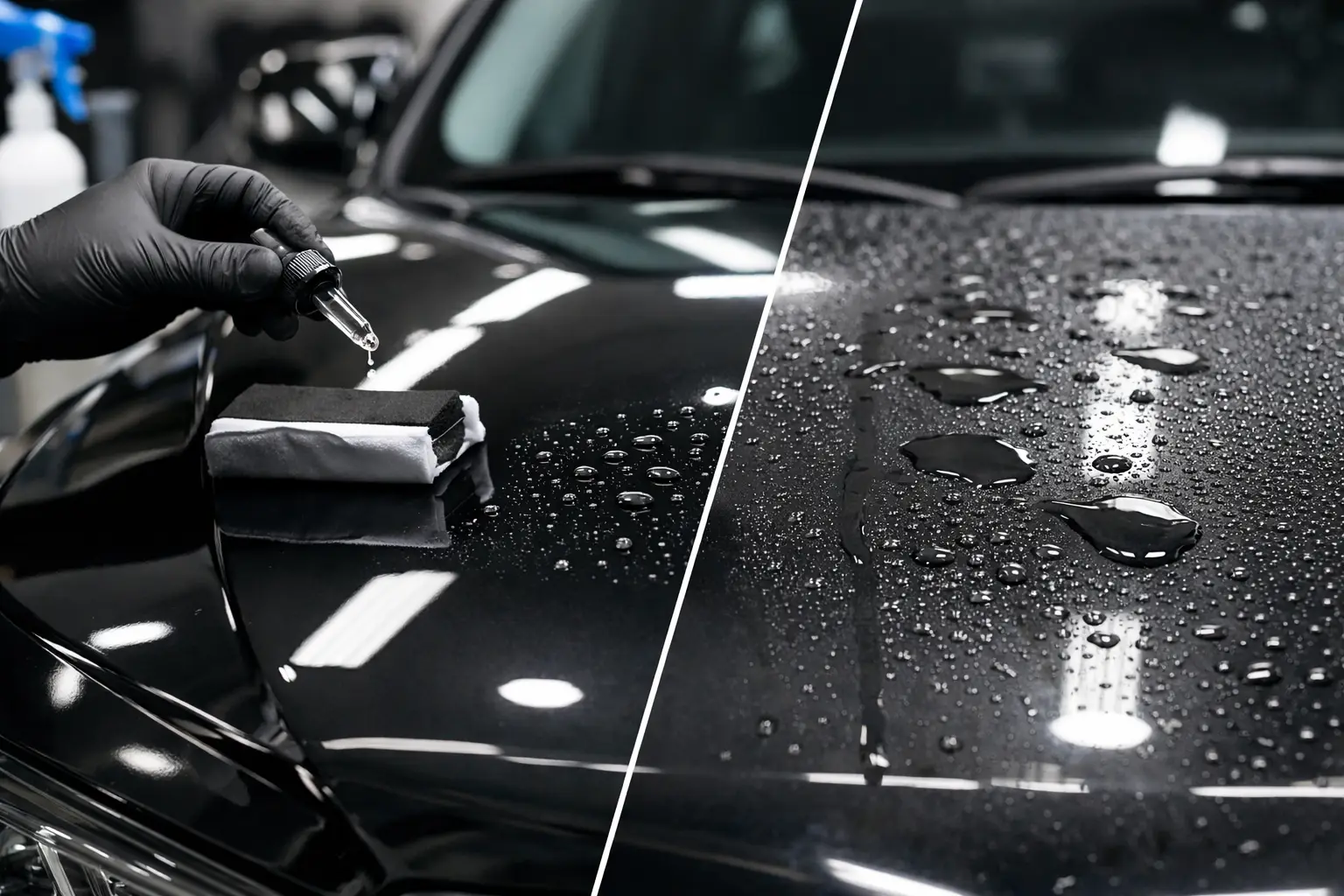
The practical benefits are what most drivers notice first. Water beads and runs off more easily. Dirt, bird droppings, tree sap, and road grime are less likely to bond as aggressively. The paint tends to look deeper and glossier as well, especially if the surface has been corrected before the coating goes on.
That last point is important. Ceramic coating locks in the condition of the paint underneath it. If the paint is swirled, oxidised, or dull beforehand, the coating will not hide those issues. Proper prep matters just as much as the coating itself.
For Adelaide conditions, that can be especially useful. Strong UV exposure, dust, road grime, and day-to-day outdoor parking all take a toll over time. A professionally applied coating helps slow that wear and keeps maintenance simpler.
Where ceramic coating helps, and where it does not
Ceramic coating is excellent for easier maintenance and long-term finish preservation, but it has limits.
It helps against UV fading, chemical fallout, light staining, and the general grime that builds up from commuting and outdoor exposure. It also reduces the chance of contaminants sitting on the surface long enough to cause lasting marks, provided the car is still washed properly.
What it does not do is stop stone chips on the bonnet, deep scratches from rough contact, or dents from road debris. If your main concern is rock damage from country roads, highway travel, or heavy daily driving, ceramic coating on its own may not be enough.
That is why there is no one-size-fits-all answer. For some owners, ceramic coating is exactly the right balance of protection, appearance, and value. For others, especially those with newer vehicles or higher-end paintwork, combining methods makes more sense.
Ceramic coating vs paint protection film
When people ask what is difference between ceramic coating and paint protection, they are often really comparing ceramic coating with paint protection film.
The main difference is the type of protection each one gives. Ceramic coating is a liquid layer that improves surface resistance and ease of cleaning. Paint protection film is a thicker physical barrier that helps absorb impact from stones and minor abrasions.
If your concern is keeping the car looking cleaner, glossier, and easier to maintain, ceramic coating is often the better fit. If your concern is preventing chips on high-impact areas like the front bar, bonnet, guards, and mirrors, film does a job ceramic simply cannot.
Many owners choose both. Film goes on the most exposed panels, while ceramic coating is applied over the rest of the paint, and sometimes over the film too depending on the product system. That approach costs more upfront, but it covers both appearance and physical protection.
Which option suits your car best?
The right choice depends on your vehicle and your expectations.
For a daily driver parked outside, ceramic coating is often a smart practical upgrade. It helps with UV exposure, makes regular washing less of a chore, and keeps the paint looking fresher without constant polishing. For families, commuters, and busy professionals, that convenience matters.
For a new car you want to keep long term, it is worth thinking beyond the sales pitch and focusing on the risks your paint actually faces. If the car sees lots of freeway kilometres, coastal roads, or regional trips, paint protection film on the front end may be the more valuable first step. If the priority is overall finish, gloss, and easier maintenance across the whole vehicle, ceramic coating usually offers better day-to-day satisfaction.
If you have an older car, prep work becomes the deciding factor. A coating on neglected paint will not perform or look as good as a coating on corrected paint. Sometimes investing in paint correction first gives you the biggest visual improvement, then the protection layer keeps that result in place.
Price matters, but so does value
It is tempting to compare options on price alone, but cheaper and better are rarely the same thing in paint protection.
A basic paint protection package may sound attractive, but if it is just a short-term sealant dressed up with a bigger label, you may be paying for less durability than expected. A proper ceramic coating service includes decontamination, paint prep, careful application, and curing time. That process is part of the value.
The same goes for film. Quality film installed properly is not cheap, but neither is repainting chipped panels down the track. The best option is the one that matches your driving habits, ownership plans, and maintenance routine.
A good provider should explain the trade-offs clearly. You should know what the product can do, what it cannot do, how long it is expected to last, and what sort of aftercare it needs.
The real question to ask before booking
Instead of only asking what is difference between ceramic coating and paint protection, ask what problem you are trying to solve.
If you want easier washing, stronger gloss, and protection from everyday contamination, ceramic coating is likely the answer. If you want defence against chips and physical road damage, you need to look at film. If you want both, there is no rule saying you must choose one only.
At Rox Auto, that is usually where the best conversations start – not with jargon, but with how you use your car and what level of protection makes sense for it.
The best protection is not the most expensive package on paper. It is the one that fits your car, your routine, and the way you actually drive.