
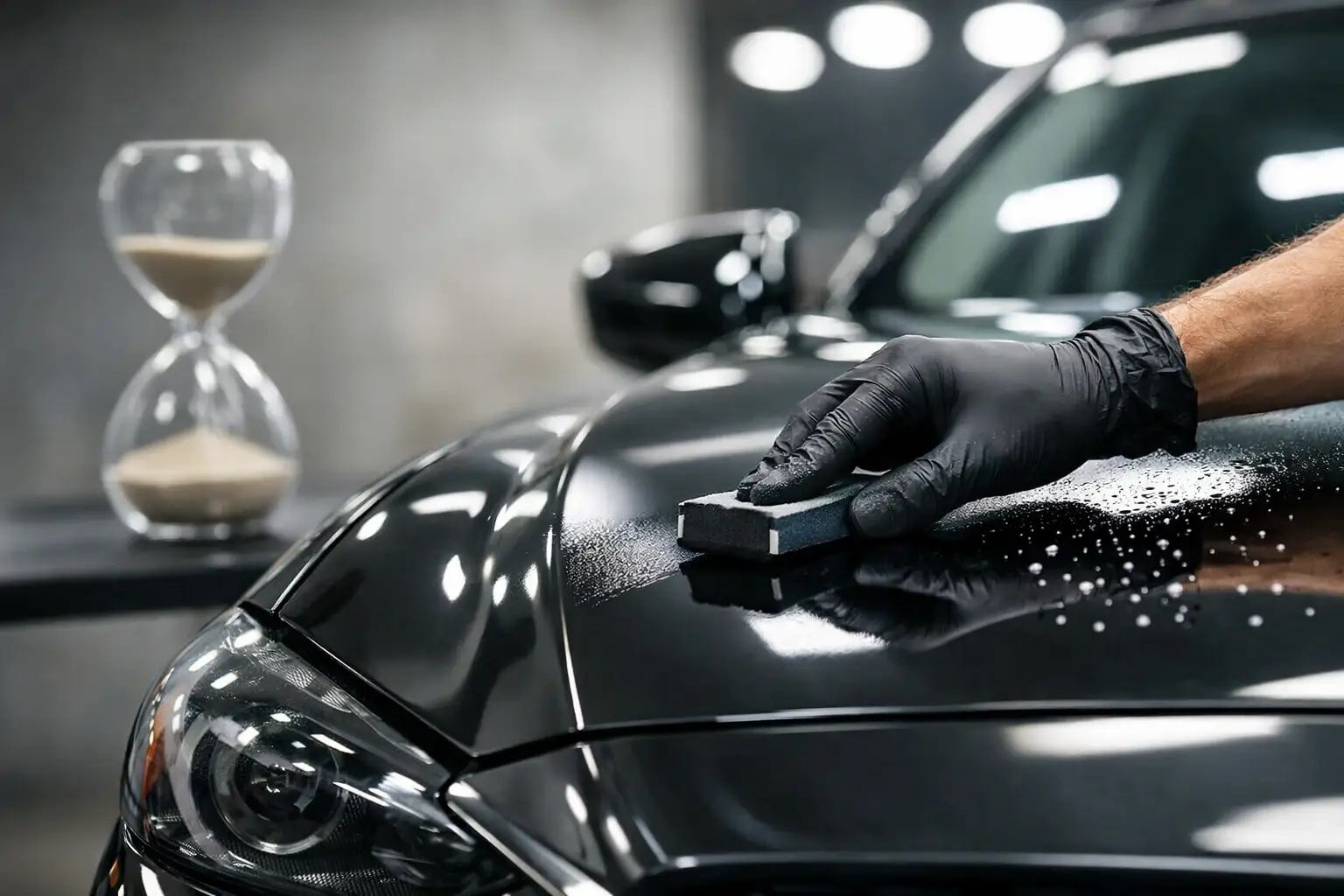
You can wash two cars the same way, park them on the same street, and still get very different results from ceramic coating. That is why when people ask how long does ceramic paint protection last, the honest answer is not a single number. It depends on the quality of the coating, how the paint was prepared, where the car lives, and how it is maintained after application.
For most drivers, ceramic paint protection can last anywhere from 1 to 7 years. Entry-level coatings usually sit at the shorter end of that range, while premium professional-grade systems can hold up for several years when they are applied properly and cared for well. The coating does not suddenly disappear overnight, either. It tends to wear down gradually, with water behaviour, gloss, and ease of cleaning changing first.
How long does ceramic paint protection last in real conditions?
If you want the practical version, here it is. A basic coating package may last around 12 to 24 months. A mid-range professional coating can often deliver 3 to 5 years. Higher-end ceramic systems, especially those paired with correct prep and maintenance, may last up to 7 years or longer in favourable conditions.
That said, lab claims and real-world driving are not the same thing. Adelaide conditions can be hard on paint. UV exposure, road grime, bird droppings, hard water, and regular outdoor parking all speed up wear. A car that lives in a garage and gets washed properly will usually keep its coating performance longer than a daily driver parked outside at work, at home, and at the shops.
This is where expectations matter. Ceramic coating is long-term protection, but it is not permanent protection. It is built to reduce damage, make maintenance easier, and keep the paint looking better for longer. It is not a force field.
What actually affects ceramic coating lifespan?
The biggest factor is preparation. If the paint is not cleaned, decontaminated, and corrected where needed before the coating goes on, the product is bonding to whatever is sitting on the surface rather than to properly prepared clear coat. That shortens lifespan and usually affects gloss as well.
Product quality also makes a real difference. There is a large gap between a consumer spray coating and a professional ceramic system installed by an experienced applicator. They might both be sold under the broad label of ceramic protection, but they do not perform the same way or last the same length of time.
Then there is maintenance. Automatic car washes with harsh brushes, cheap detergents, skipped washes, and letting contaminants bake onto the paint all wear coatings down faster. On the other hand, careful hand washing and occasional maintenance treatments can keep a coating performing closer to its best for much longer.
Usage matters too. A weekend car that avoids rough weather, long highway runs, and constant sun exposure will usually hold up better than a family SUV doing school drop-offs, beach trips, and daily commuting.
The environment can shorten the life of a coating
Australian conditions are not gentle on exterior surfaces. Strong sun, heat, dust, rain spots, coastal salt in some areas, tree sap, and bird mess all test the coating over time. If your car is regularly parked under trees or outside all day, the coating is doing more work than one on a garaged car.
That does not mean ceramic protection is not worth it. It usually means the coating becomes even more useful because it helps the vehicle resist the daily punishment better than bare paint would. But it is fair to expect the lifespan to be shaped by those conditions.
Application quality matters more than many people realise
A good coating on badly prepared paint will not perform like a good coating on properly corrected paint. Professional application is not just about putting product on the panel. It is about paint inspection, machine correction if needed, panel wipe-down, controlled application, and curing time.
That is one reason coating packages often vary in price. You are not only paying for the bottle. You are paying for the process that gives the coating the best chance to last.
Signs your ceramic paint protection is wearing off
Most owners first notice it during a wash. Water stops beading and sheeting as cleanly as it used to. The car may still look glossy, but dirt sticks more easily and takes more effort to remove.
Another sign is that the paint no longer feels as slick after washing. You might also notice water spots hanging around longer or contamination bonding more readily to the surface. None of that automatically means the coating is completely gone. Sometimes it means the surface is clogged and needs a decontamination wash or maintenance top-up.
That distinction matters because a coating can appear tired before it is actually dead. Proper inspection can tell whether it needs maintenance or whether it has reached the end of its service life.
How to make ceramic paint protection last longer
The simple answer is to wash it properly and deal with contamination early. A pH-neutral wash, soft wash media, and safe drying methods go a long way. Bird droppings, bug splatter, and tree sap should be removed as soon as practical because they can etch into both coatings and clear coat if left sitting in the sun.
It also helps to avoid harsh automatic car washes, especially the brush-style ones. They create swirls and can wear the top of the coating faster. If the car does a lot of outdoor parking, regular maintenance becomes more important, not less.
Some owners assume ceramic coating means they can stop caring for the paint altogether. That is usually where disappointment starts. Ceramic protection reduces upkeep, but it does not replace it. Think of it as making every wash easier and helping the paint stay in better shape between washes.
Maintenance packages can extend performance
A maintenance coating or periodic check-up can help keep the surface working as intended. This is especially useful for daily drivers and cars exposed to full weather year-round. The idea is not to keep selling unnecessary extras. It is to preserve the performance you paid for in the first place.
For busy owners, that kind of ongoing care can be the difference between a coating that merely survives and one that continues to look sharp year after year.
Is ceramic coating worth it if it does not last forever?
For most people, yes. The value is not only in the number of years. It is in what those years look like. Better gloss, easier cleaning, less bonding of grime, and improved resistance to UV and chemical contamination all add up over time.
If you care about keeping your car looking tidy without making every wash a big job, ceramic paint protection makes sense. If you want to preserve resale appeal, reduce wear from everyday exposure, and keep the paint easier to manage, it makes sense there too.
The trade-off is that professional coating is not the cheapest option upfront, and it still needs sensible care. But compared with the cost and hassle of neglected paint, frequent polishing, or trying to fix long-term damage later, many owners see it as money well spent.
So, how long should you expect it to last?
A realistic expectation for a professionally applied coating is 2 to 5 years for many daily driven vehicles, with shorter or longer results depending on package level and care. If someone promises permanent protection or claims maintenance does not matter, take that with a grain of salt.
The better question is not only how long the coating can last, but how well it will perform during that time. A properly installed ceramic coating should make your vehicle easier to wash, better protected from the elements, and noticeably glossier through the life of the product.
If you want the coating to go the distance, start with proper prep, choose a package that suits how you actually use your car, and keep up with basic maintenance. That approach usually delivers better results than chasing the biggest year claim on the label.
For Adelaide drivers dealing with strong sun, daily commuting, and real-world wear, the right ceramic protection is less about chasing a perfect number and more about choosing a practical level of protection that fits your car and your routine. You pick what works best. The rest comes down to doing the job properly and looking after it once it is on.