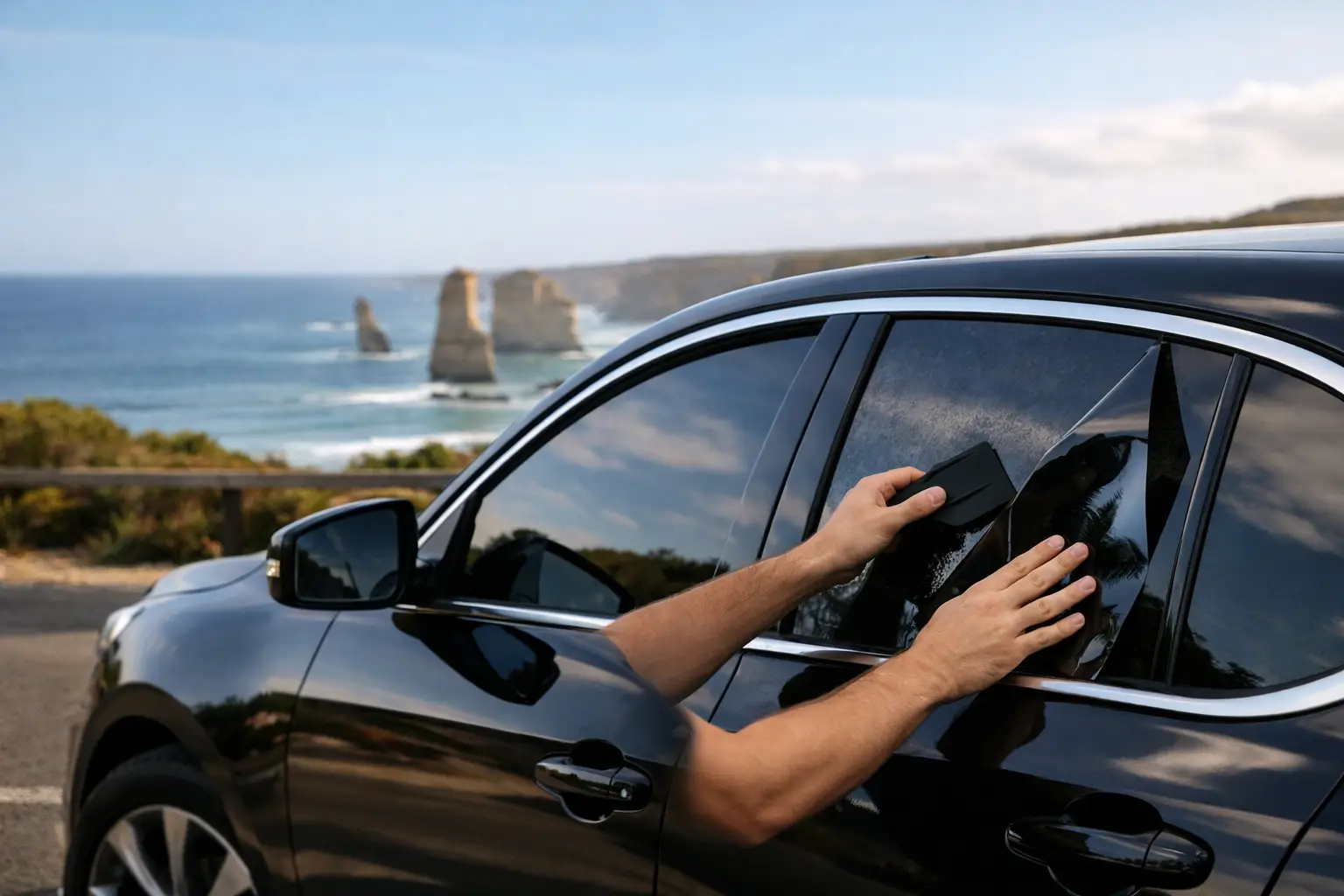
Sticker shock usually happens when two cars that look similar get quoted very different prices for tint. One might be a straightforward sedan with clean glass and easy access. The other might have curved rear glass, old film to remove, or a darker premium product selected for better heat rejection. If you’re asking how much to tint car windows Australia, the honest answer is that most drivers are paying for a mix of film quality, vehicle size, glass shape, and who’s doing the work.
For most Australian vehicles, a basic professional tint job often starts around $250 to $350 for smaller cars. Mid-range options commonly sit between $350 and $550. Premium films, larger vehicles, and more complex jobs can push pricing to $600 or more. That’s the quick answer, but it only helps if you know what’s behind the number.
How much to tint car windows in Australia really costs
The biggest pricing split is usually between entry-level dyed film and higher-performing films such as carbon or ceramic. Dyed film is generally the cheapest way to improve privacy and cut some glare. It can suit older daily drivers or anyone chasing a sharper look without stretching the budget.
Carbon and ceramic films cost more because they generally perform better in heat rejection, UV protection, clarity, and long-term appearance. In an Adelaide summer, that difference matters. A cheaper tint may darken the glass, but that does not always mean it will keep the cabin cooler in the way people expect.
A rough guide for professionally installed tint in Australia looks like this:
- Small hatchbacks and sedans: around $250 to $450
- Larger sedans and wagons: around $300 to $500
- SUVs and 4WDs: around $350 to $600
- Premium ceramic films or complex vehicles: often $500 to $800+
Those numbers are broad on purpose. A compact hatch with standard side and rear windows is a very different job from a large SUV with steep rear glass, extra quarter windows, or existing tint that needs removal first.
What changes the price of window tinting
Vehicle size and glass layout
More glass usually means more material and more labour. A dual-cab ute with extra windows behind the rear doors will often cost more than a small sedan. Curved rear windows can also add time because they require careful heat shrinking and a cleaner finish.
Some prestige vehicles also have tighter trim, more sensitive electronics, or glass shapes that simply take longer to work with. Good tinting is not just sticking film on glass. The prep, cutting, shrinking, and edge finishing all affect the end result.
Film type
This is where quotes can vary fast. A lower-cost film may still be professionally installed and still look neat, but it may not offer the same infrared heat rejection, fade resistance, or optical clarity as a premium product.
If your main goal is appearance and basic privacy, an entry-level film may do the job. If you spend a lot of time on the road, park outside, or want to reduce cabin heat as much as possible, stepping up to a better film is usually money well spent.
Legal tint limits
Legal limits matter because darker is not always better, and not every shade is road legal. In Australia, tint laws vary by state and territory. That means the legal darkness for front side windows in South Australia may differ from another part of the country.
A reputable installer should quote a film that suits your vehicle and local regulations. If someone offers something suspiciously dark for the front windows without explaining the rules, that is a red flag. Cheap tint is one thing. Non-compliant tint that causes defects or insurance headaches is another.
Old tint removal
If your car already has bubbling, purple, peeling, or scratched film, removal can add a fair bit to the job. Old adhesive takes time to strip properly, especially on rear windows with demisters. Rushing this part can damage lines in the glass or leave contamination behind that affects the new install.
That is why two identical cars can still receive different prices. A fresh install is one job. Correcting a poor or ageing tint job is another.
Mobile service vs workshop installation
Some customers prefer a workshop because the environment is more controlled. Others want the convenience of having the job done at home or work. Mobile tinting can be a great option when it is done properly, but the setup still needs to suit the work.
If you have a clean, sheltered spot, mobile service can save time and make the whole process easier. That convenience can be part of the value, especially for busy professionals or families who do not want to rearrange the day around a workshop visit.
Cheap tint vs good tint
Price matters, but value matters more. The cheapest quote is not always the cheapest once you factor in bubbling, fading, poor edge finish, or film that turns purple after a year or two.
A good tint job should look clean from both inside and outside the car. It should sit neatly along the window edges, avoid contamination, and hold up through heat, cleaning, and daily use. Better films also tend to carry stronger warranties, which gives you more confidence that the job is built to last.
This is one of those areas where trade-offs are real. If you are selling an older car soon, you may not need a premium film. If you plan to keep the vehicle for years, spend plenty of time driving, or have kids in the back, a stronger-performing film usually makes more sense.
Is DIY window tint worth it?
DIY kits are cheaper upfront, and that can be tempting. But most people find out pretty quickly that cutting and shrinking film cleanly is harder than it looks. Dust, creases, fingers, light gaps, and uneven edges are common problems. Rear windows are especially tricky.
For many drivers, the cost of professional installation is justified by the finish, the warranty, and not having to do the job twice. If you care about appearance, comfort, and long-term durability, professional tinting is usually the smarter buy.
How to compare quotes without getting caught out
If you are shopping around, do not just compare the final number. Ask what type of film is being used, whether the quote includes all side and rear windows, if old tint removal is extra, and what warranty applies. You should also ask whether the film is compliant for your state.
A lower quote may only cover basic film on selected windows. A higher quote may include better heat rejection, a cleaner installation, and stronger aftercare support. On paper they can look similar. In practice they are often not the same job.
This is also where local experience helps. An installer who works in Adelaide understands the heat, the glare, and the kind of performance local drivers expect in summer. That matters more than a generic promise that every film is the same.
What most Adelaide drivers actually choose
For daily drivers, the sweet spot is often a mid-range to premium film that balances price with noticeable heat and UV reduction. It gives the car a cleaner look, improves comfort, and avoids the disappointment that can come with the cheapest options.
Families often prioritise rear-seat comfort and UV protection. Commuters usually care about glare and cabin temperature. Owners of newer or premium vehicles tend to lean towards ceramic films because they want strong performance without compromising visibility or finish.
At Rox Auto, that practical middle ground is where a lot of customers land. They want the car to look better, stay cooler, and be easier to live with, but they also want the process to be simple. Mobile or workshop, you pick what works best. We’ll handle the rest.
So, how much to tint car windows Australia?
If you want a realistic number, most Australian drivers should expect somewhere from $250 to $600 for professional window tinting, with premium or more complex jobs going higher. The right price depends on your car, the film you choose, whether old tint needs removal, and how important long-term performance is to you.
A good tint should feel like money well spent every time you get in the car on a hot day. If a quote seems too cheap, ask what has been left out. If it seems high, ask what extra protection and finish you are paying for. The right job is not about getting the darkest film or the lowest number. It is about getting a clean, legal result that suits how you drive and how long you plan to keep the car.